
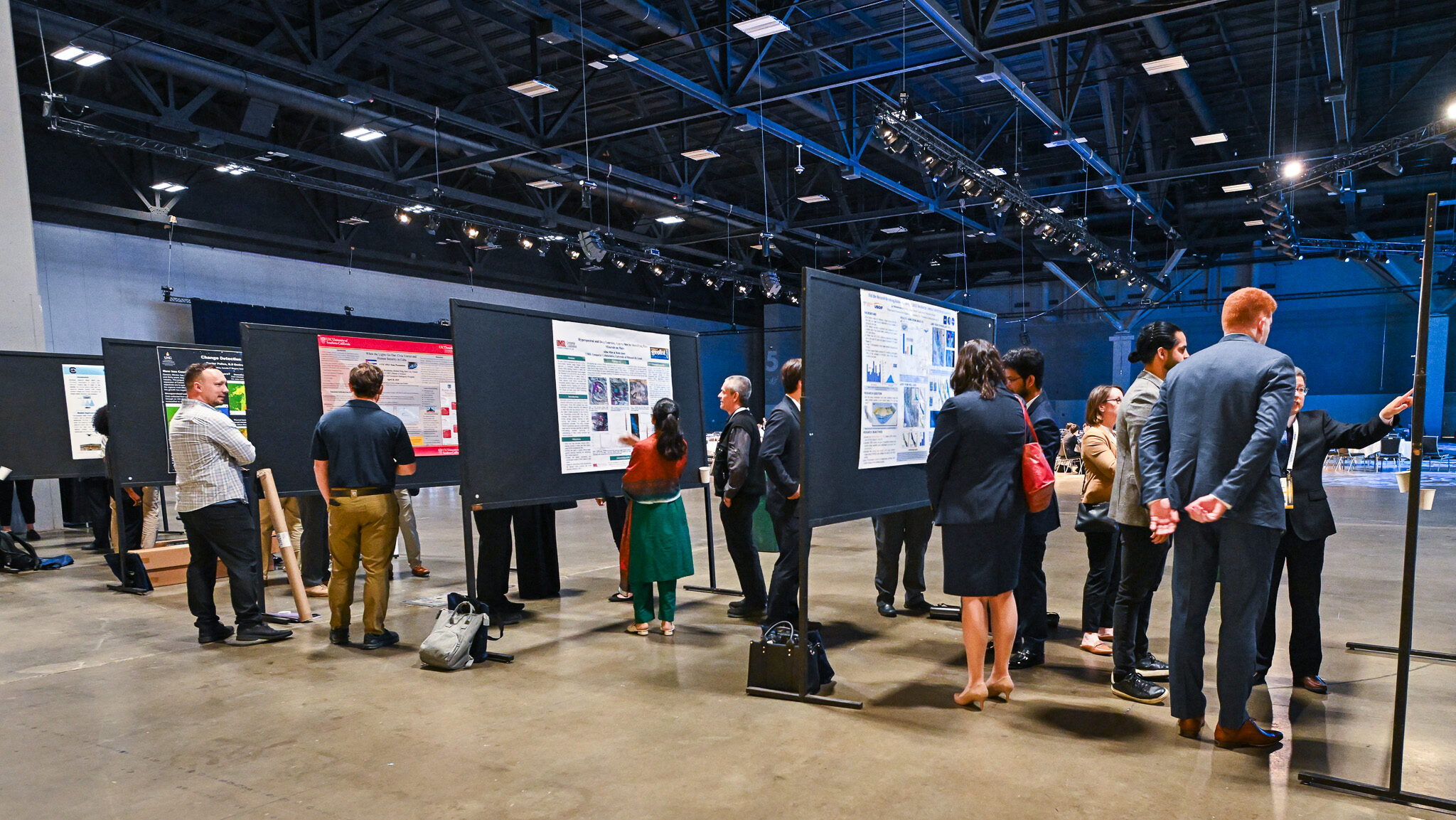
USGIF proudly recognizes the outstanding achievements of the top three winners of the 2025 Student Poster Competition, selected from an exceptional field of university researchers presenting innovative applications of geospatial intelligence. These students and their work exemplify the next generation of GEOINT thought leadership and technical expertise.
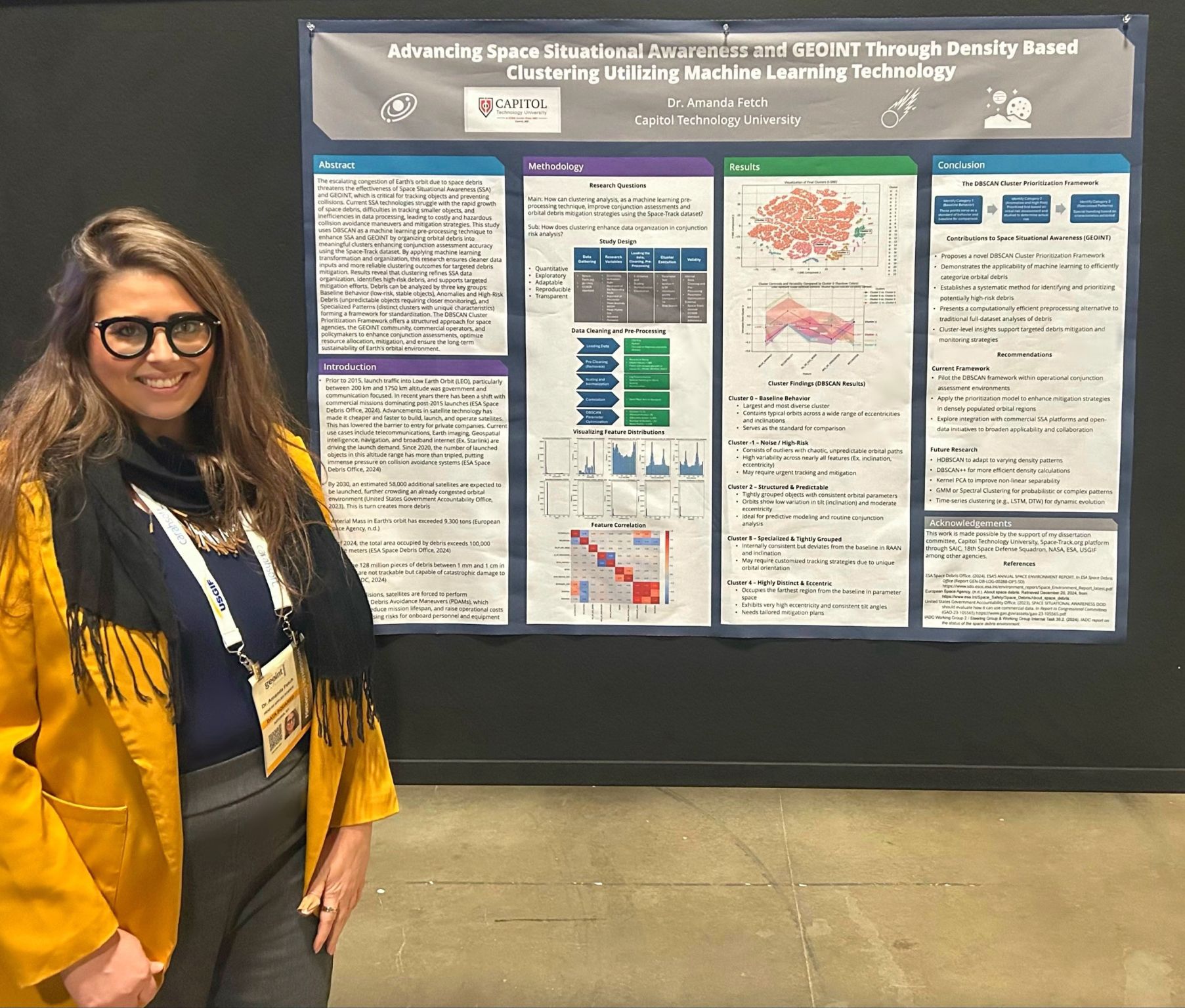
First Place: Dr. Amanda Fetch
Capitol Technology University
Dr. Amanda Fetch was awarded first place for her research tackling one of today’s most urgent GEOINT challenges: orbital congestion and space debris. Her poster, “DBSCAN Cluster Prioritization Framework for Space Debris Mitigation,” demonstrated how machine learning can enhance Space Situational Awareness (SSA) by clustering orbital debris using DBSCAN to support improved conjunction assessments and targeted mitigation. Fetch’s framework categorizes debris into three groups—Baseline Behavior, High-Risk Anomalies, and Specialized Patterns—offering a standardized approach for prioritizing resources and protecting space infrastructure.
“The recognition reaffirmed that space debris and orbital anomaly detection are urgent, real-world challenges that require immediate innovation,” said Fetch.
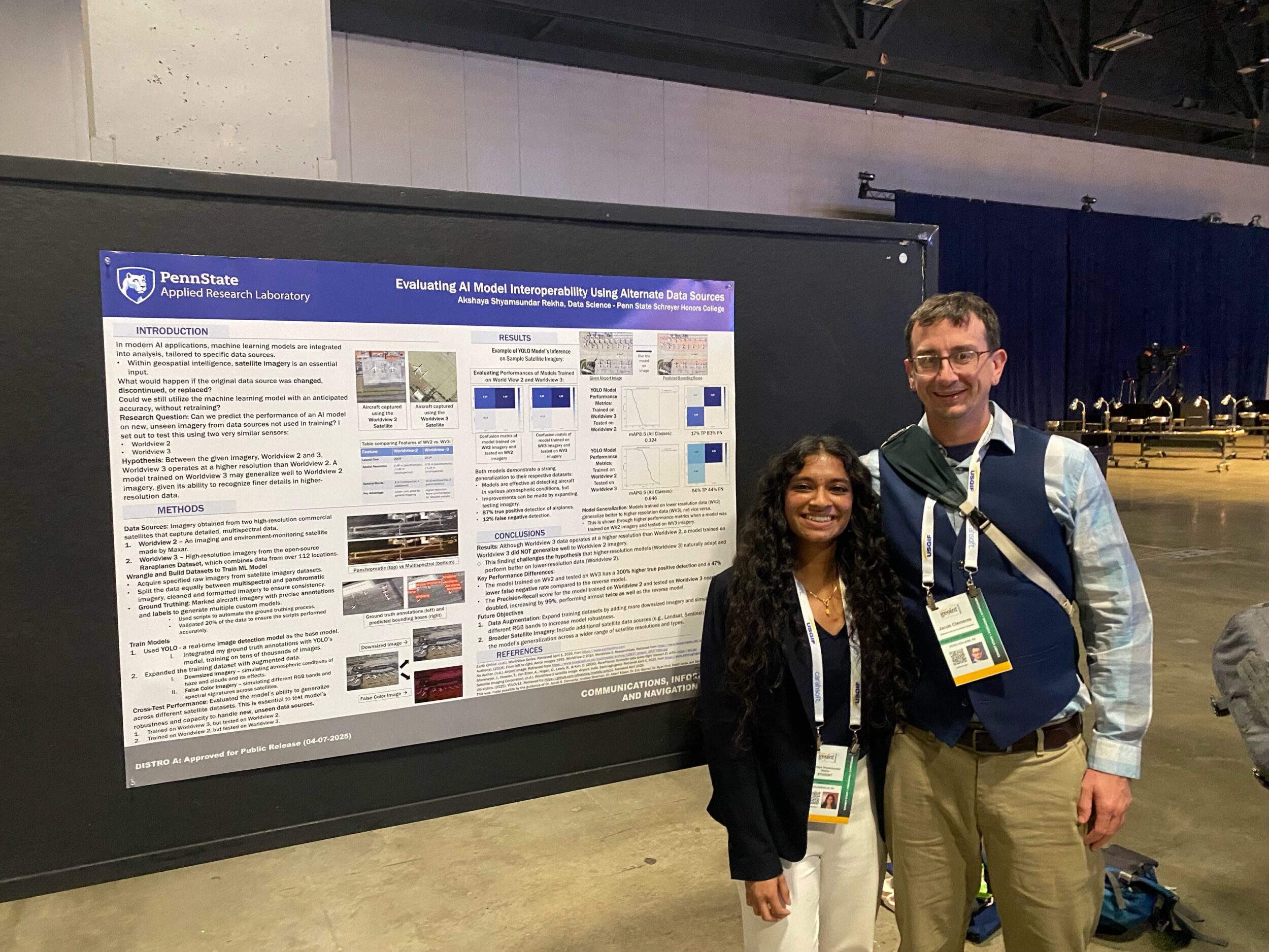
Second Place: Akshaya Shyamsundar Rekha
Pennsylvania State University
Akshaya Shyamsundar Rekha earned second place for her work on sensor interoperability in machine learning models. Her research explored how aircraft detection algorithms trained on one satellite’s imagery (WorldView-2) perform on another (WorldView-3), revealing surprising findings that coarser-resolution imagery may yield more adaptable, transferable models. Her poster, “Sensor Generalization in Aircraft Detection Using YOLO Models,” provides a foundation for building more resilient remote sensing systems in environments where sensor continuity cannot be guaranteed.
“This was a very meaningful experience that allowed me to grow both as a researcher and as a member of the geospatial intelligence community,” she shared.
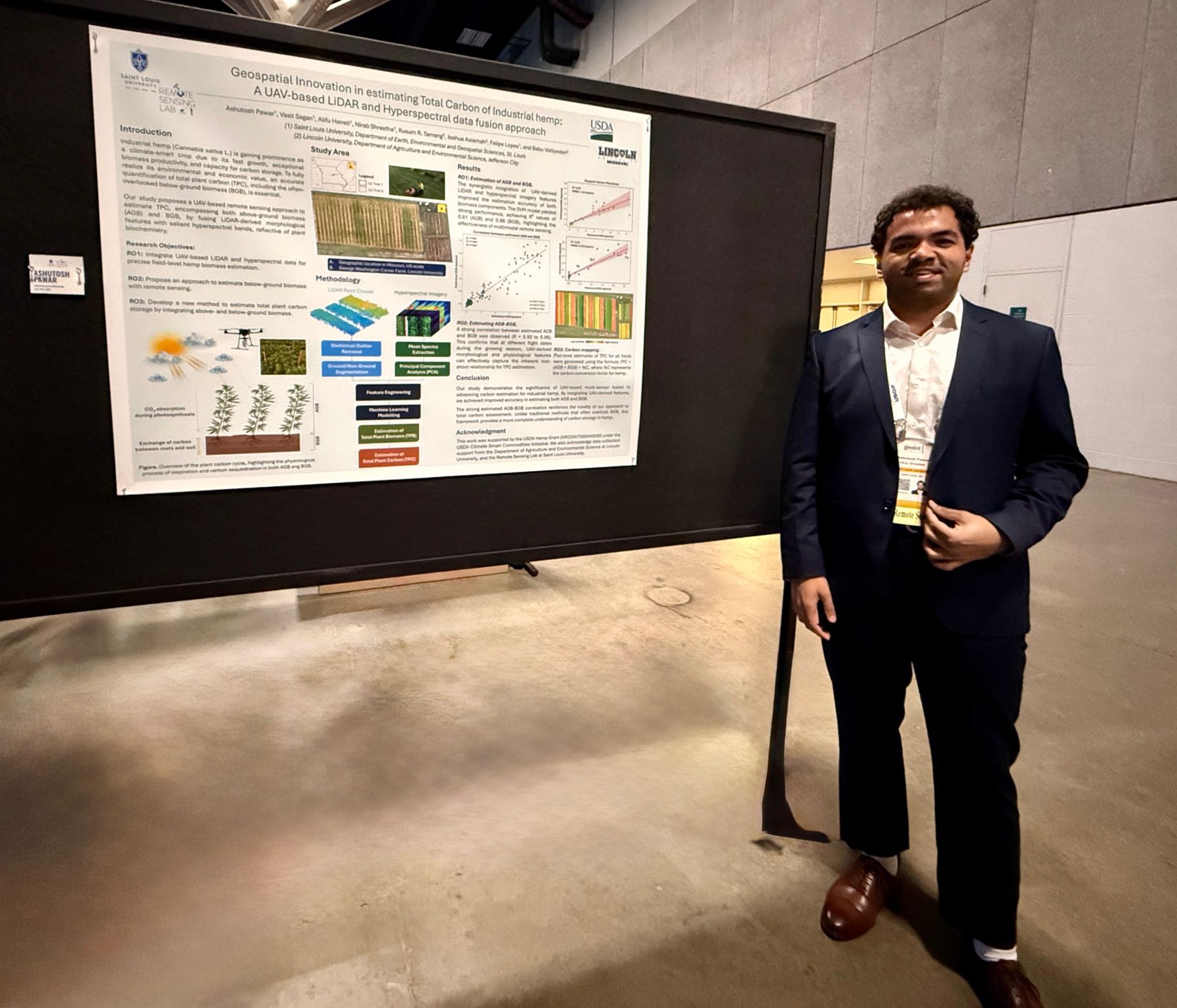
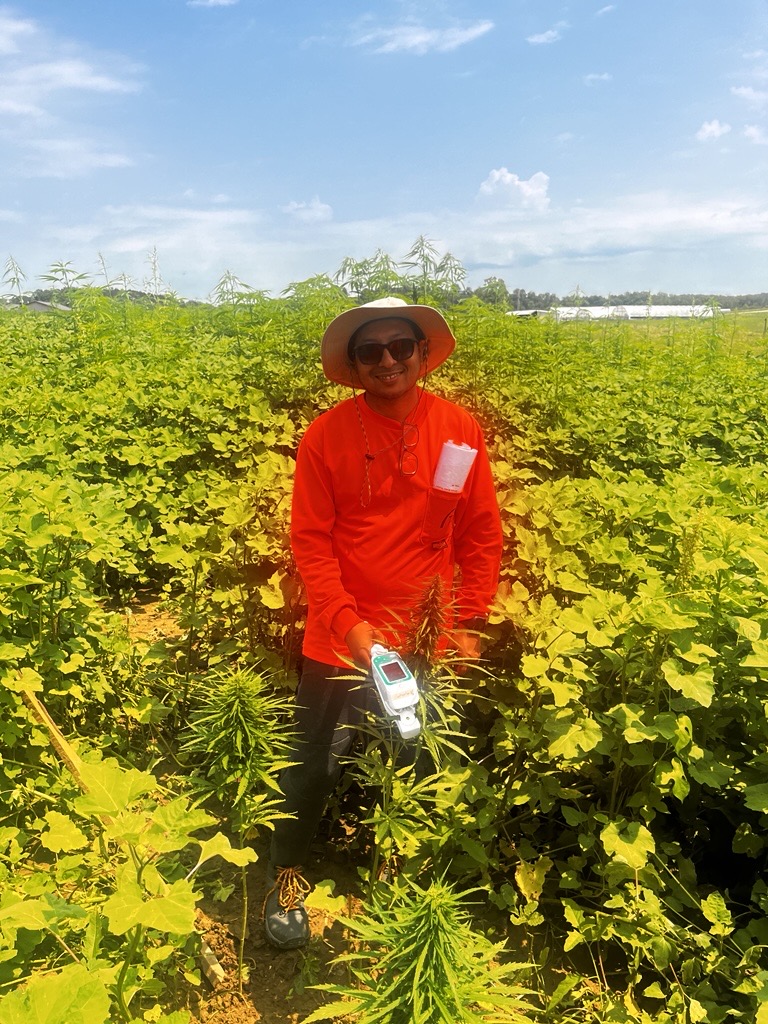
Third Place: Ashutosh Pawar and Nirab Shrestha
Saint Louis University
Team members Ashutosh Pawar and Nirab Shrestha secured third place for their dual-sensor approach to quantifying carbon sequestration in industrial hemp. Their poster, “Estimating Total Plant Carbon in Hemp Using UAV-Based LiDAR and Hyperspectral Remote Sensing,” used advanced machine learning and knowledge distillation to measure both above- and below-ground biomass. Their methodology demonstrated a high correlation between biomass estimates and carbon capture capacity, supporting the use of remote sensing in sustainable agriculture and climate monitoring.
“Placing third in the student poster competition validated the potential of GeoAI innovations in remote sensing. We’re motivated to push these approaches even further for global monitoring as we continue our PhD journeys,” the team stated.
Related Articles
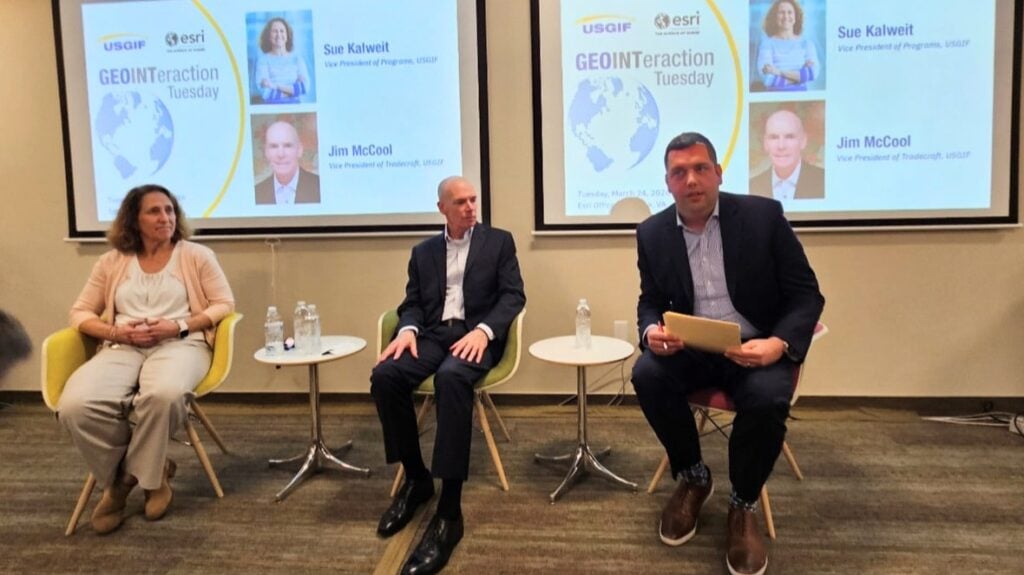
GEOINTeraction Tuesday at Esri: A Conversation with USGIF’s New VPs
On March 24, members of the GEOINT community gathered at Esri’s Tysons office for a special GEOINTeraction Tuesday featuring USGIF’s newly appointed Vice Presid…

GEOINTeraction Colorado: Data Standards, AI Integration, and the Skills That Keep GEOINT Mission-Ready
On March 19, 2026, USGIF convened the inaugural GEOINTeraction Colorado in Colorado Springs, bringing together industry professionals, Army personnel, and intel…
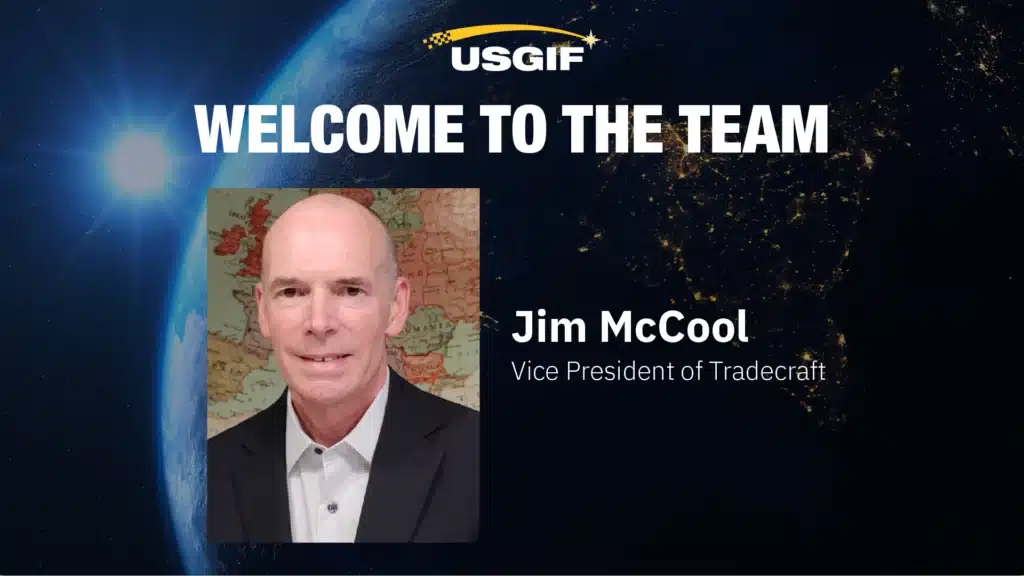
USGIF Welcomes Jim McCool as Vice President of Tradecraft
USGIF is pleased to welcome Jim McCool as its new Vice President of Tradecraft. Mr. McCool, CEO of McCool Team LLC, retired from government service as a Nationa…